How Is Bubble Wrap Made? Facts About Bubble Wrap
Key Takeaway
How bubble wrap is made, step by step: from polyethylene pellets to sealed air bubbles, plus small vs large bubble and a short history.
Bubble wrap is one of the most familiar packaging materials there is, but few people know how it is made or why it works so well. Here is how the bubbles get into the film, what the two common bubble sizes are for, and how a failed wallpaper became the standard for protecting fragile goods.
Short answer
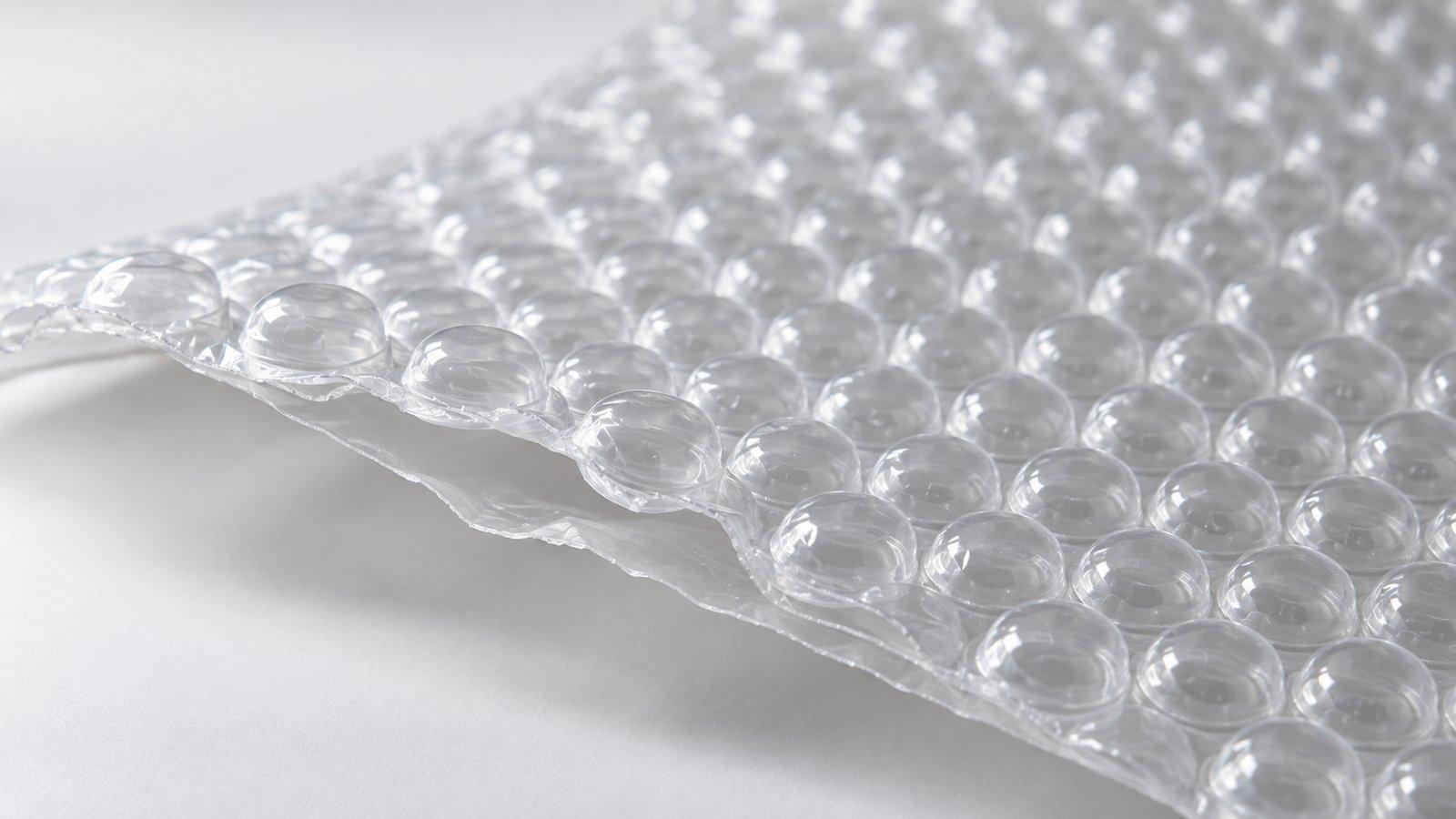
Bubble wrap is made from polyethylene. The plastic is melted and extruded into two thin films. One film is pulled by vacuum into the holes of a turning cylinder to form the bubbles, and the second film is laminated over it to seal the air in.
How bubble wrap is made
- Raw material. Bubble wrap starts as polyethylene, the same family of plastic used for carrier bags and bottles. It arrives at the factory as small pellets, about the size of a pea.
- Extrusion. The pellets are heated and pushed through a screw, which melts them into a liquid. The melt is formed into two thin, clear films.
- Forming the bubbles. One film passes over a steel cylinder covered in holes. A vacuum inside the cylinder pulls the warm film into each hole, which shapes the bubbles.
- Sealing. The second, flat film is laminated onto the first while both are still warm. This seals each bubble so the air cannot escape.
Small bubble and large bubble
The two common bubble sizes are made on cylinders with different sized holes. Small bubble is typically about 10 mm across and 3.5 mm high. Large bubble is typically about 20 mm across and 7 mm high.
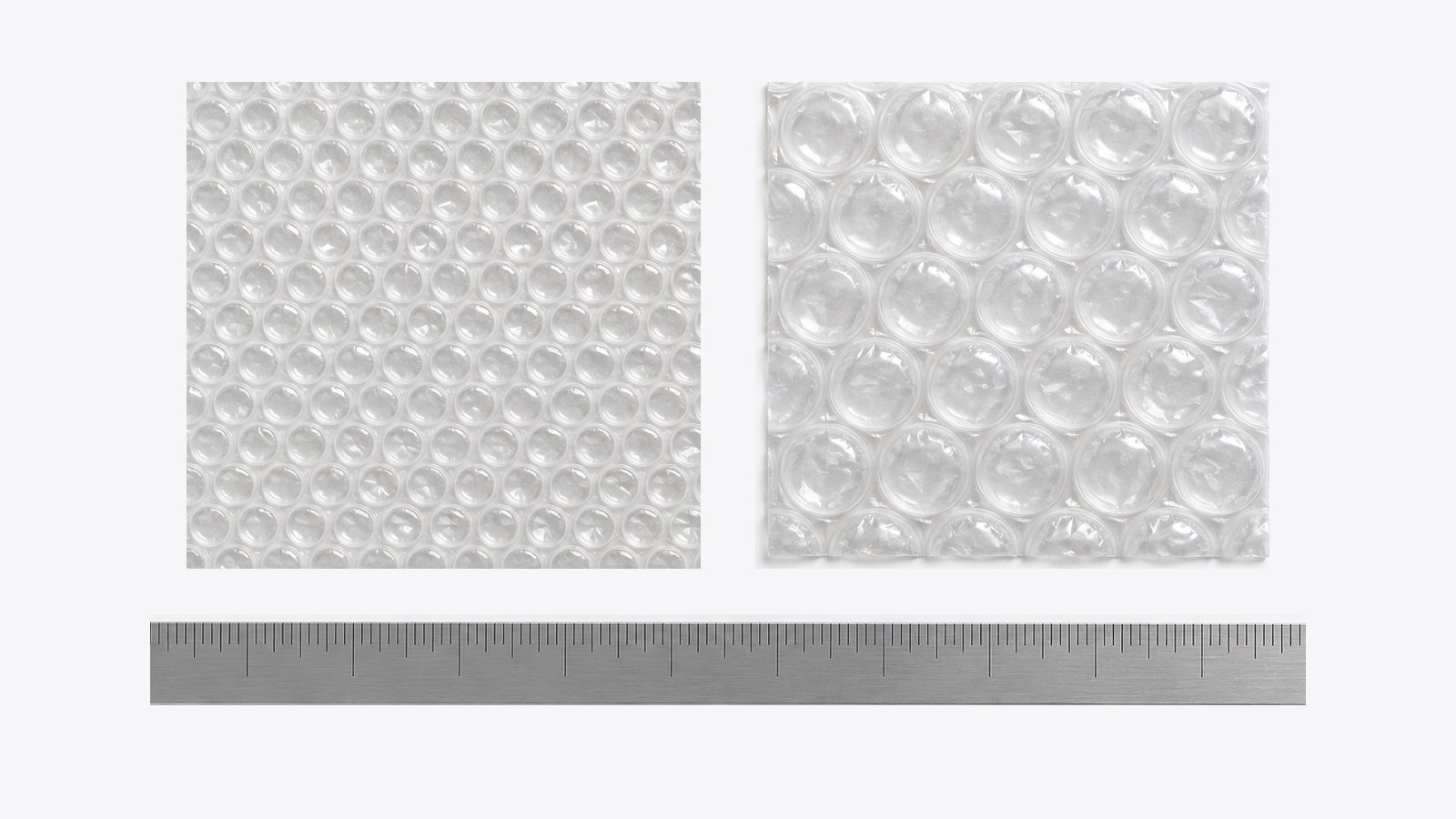
- Small bubble wrap folds tightly around glassware, ceramics and electronics, and protects surfaces from scratches and knocks.
- Large bubble wrap gives more cushioning and fills more space around heavy, bulky or awkwardly shaped items.
Not sure which to choose? Read our small vs large bubble wrap guide.
Why bubble wrap protects so well
Each bubble is a small cushion of trapped air. When a parcel is dropped or knocked, the bubbles compress and absorb the shock instead of passing it to the item inside. Because the protection comes from air, bubble wrap adds very little weight to a parcel, which helps keep postage costs down.
Bubble wrap can also be reused many times for packing and storage. Our bubble wrap is made from 100% recyclable LDPE film.
Bubble wrap was not invented for packaging
Bubble wrap was invented in 1957 by two engineers, Alfred Fielding and Marc Chavannes, who were trying to make a textured wallpaper. The wallpaper did not sell, and neither did their next idea, greenhouse insulation. The breakthrough came around 1960, when IBM used it to protect its new 1401 computer in transit. It has been a packing staple ever since.
Shop small bubble wrap rolls (100m) and large bubble wrap rolls (50m) in seven widths, at trade prices with van and truck load rates.
Ready to order packaging featured in this guide?
Explore full sizing specs, volume discount tiers, and instant pallet pricing in our live catalog matrix.
Related Technical Guides
Boxes vs Mailing Bags vs Padded Bags: Which to Use
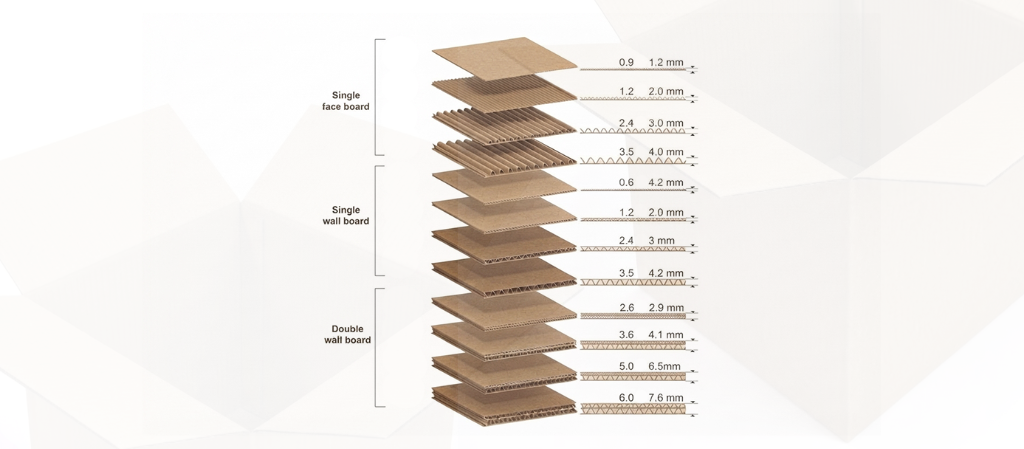
Single vs Double Wall Boxes: How to Choose
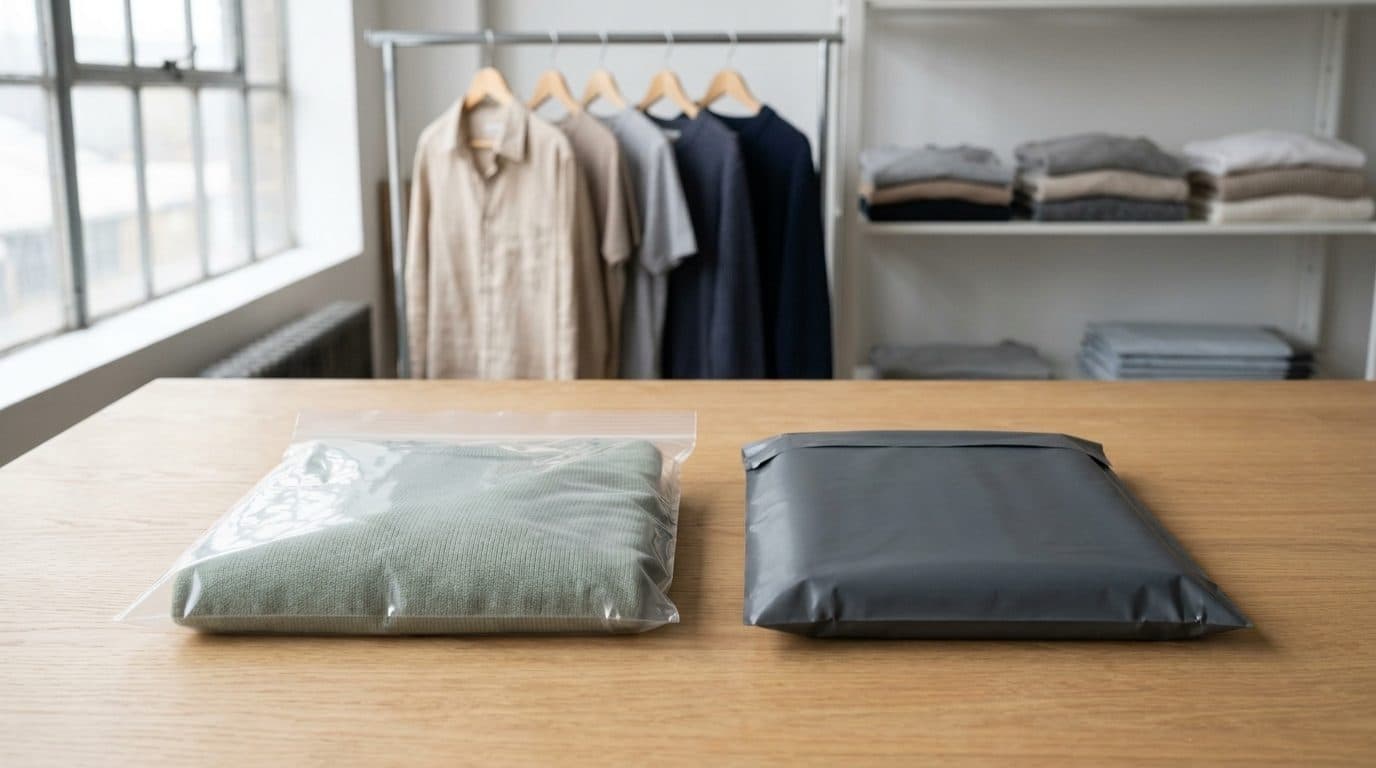
How to Ship Clothes: Mailing Bags and Grip Seal Bags