Pallet Wrap and Tape: Cast vs Blown Film Explained
Key Takeaway
Which stretch film to use for which pallet, and which tape for which box: clear cast film, black film, acrylic, solvent and paper tapes compared.
A pallet stays together because of two things: boxes that stay closed, and film that holds the boxes to the pallet. Here is how to choose both.
Stretch film: cast and blown
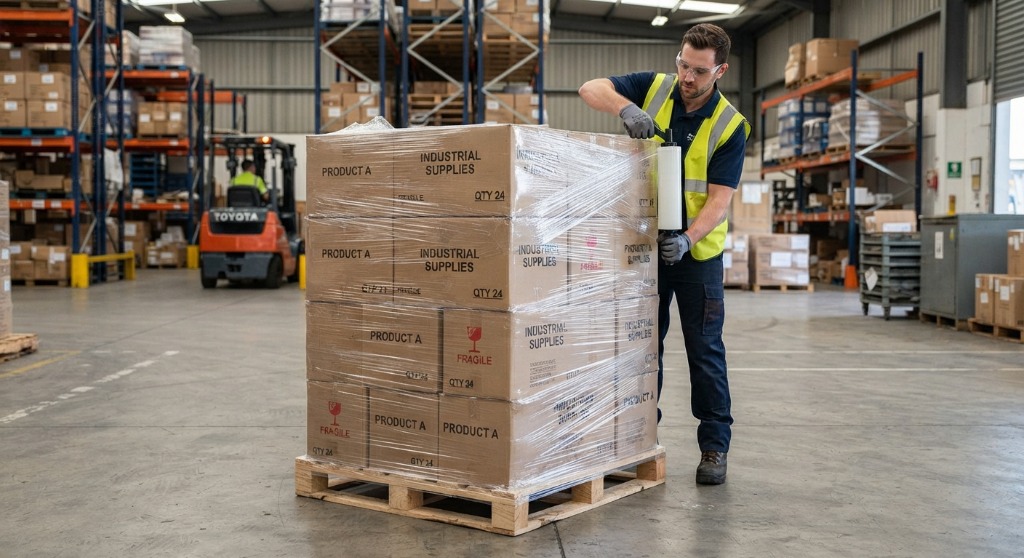
Stretch film is made in two main ways. Cast film is cooled quickly on rollers, which makes it clear and quiet to unwind. Blown film is blown into a bubble as it is made, which gives a tougher film that resists tears on sharp corners.
| Film | Type | Use it for |
|---|---|---|
| Clear 17 micron | Cast | Standard, even pallet loads |
| Clear 20 micron | Cast | Slightly heavier standard loads |
| Black 25 micron | Cast | Hiding what is on the pallet |
| Black 30 micron | Blown | Heavy or sharp-cornered loads that need tear resistance and privacy |
Clear film lets labels and barcodes be read through the wrap. Black film hides the goods, which helps with security. Versions with integral handles let you wrap by hand without a separate dispenser.
Carton sealing tape
| Tape | Adhesive | Use it for |
|---|---|---|
| 48 mm acrylic | Water-based acrylic | Everyday cartons at room temperature |
| 48 mm solvent | Natural rubber solvent | Cold stores, dusty or recycled board, heavier boxes |
| 75 mm tapes | Acrylic or solvent | Large or heavy cartons that need a wider seal |
| Self-adhesive paper tape | Natural rubber | Plastic-free parcels |
| 70 mm reinforced gummed paper | Water-activated | Heavy cartons and tamper-evident seals |
Tamper evidence
Water-activated gummed paper tape bonds into the surface of the box. Anyone who pulls it off leaves torn fibres behind, so it shows clearly if a carton has been opened.
Ready to order packaging featured in this guide?
Explore full sizing specs, volume discount tiers, and instant pallet pricing in our live catalog matrix.
Related Technical Guides
Boxes vs Mailing Bags vs Padded Bags: Which to Use
Single vs Double Wall Boxes: How to Choose
How to Ship Clothes: Mailing Bags and Grip Seal Bags